Digital Worksheets vs. Traditional Paper: When to Use Each
Frank Lora
Digital Worksheets vs. Traditional Paper: When to Use Each
The debate over digital vs. paper learning materials misses the point. The real question is: which format best serves the specific learning goal?
When Paper Wins
- Math computation — writing by hand supports procedural fluency development
- Graphic organizers — physical manipulation of spatial information
- Standardized test prep — if the test is on paper, practice on paper
- Low-distraction environments — for students who get pulled off-task by devices
When Digital Wins
- Collaboration — students can work on shared documents simultaneously
- Immediate feedback — digital tools can tell students instantly if an answer is right
- Differentiation — easy to create multiple versions for different levels
- Accessibility — text-to-speech, font adjustment, and other accommodations are built in
- Organization — no lost papers, no backpack disasters
The Hybrid Approach
Many experienced teachers use digital for instruction and initial practice, then paper for assessment. This captures the benefits of both: interactive digital content for engagement, and paper for focused, low-distraction evaluation.
AI-Generated Worksheets
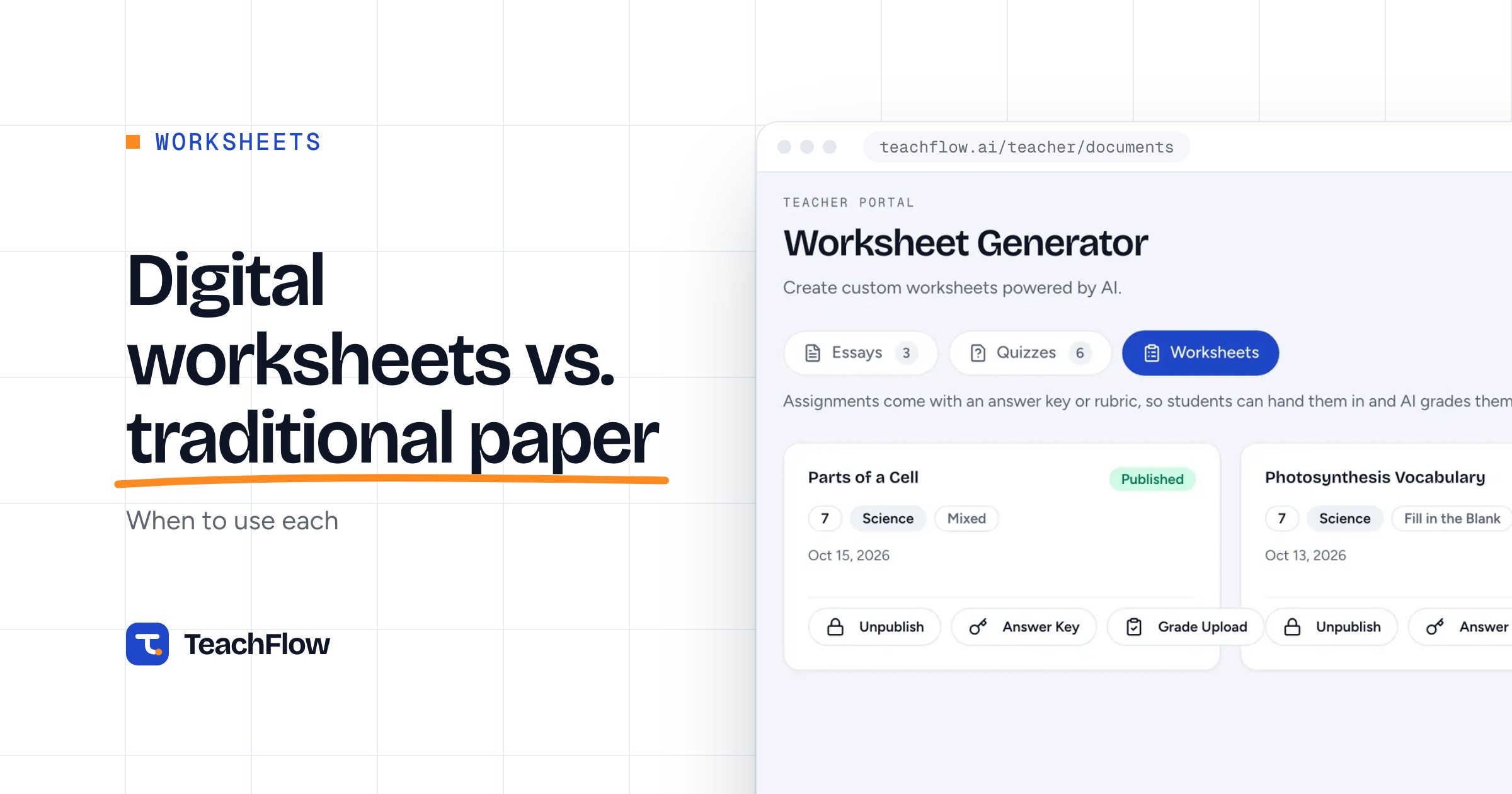
AI can generate custom worksheets in minutes, tailored to specific topics, difficulty levels, and formats. This makes differentiation practical — you can create a third version in 90 seconds rather than spending an hour adapting an existing document.