Parent Communication Done Right: Templates That Actually Work
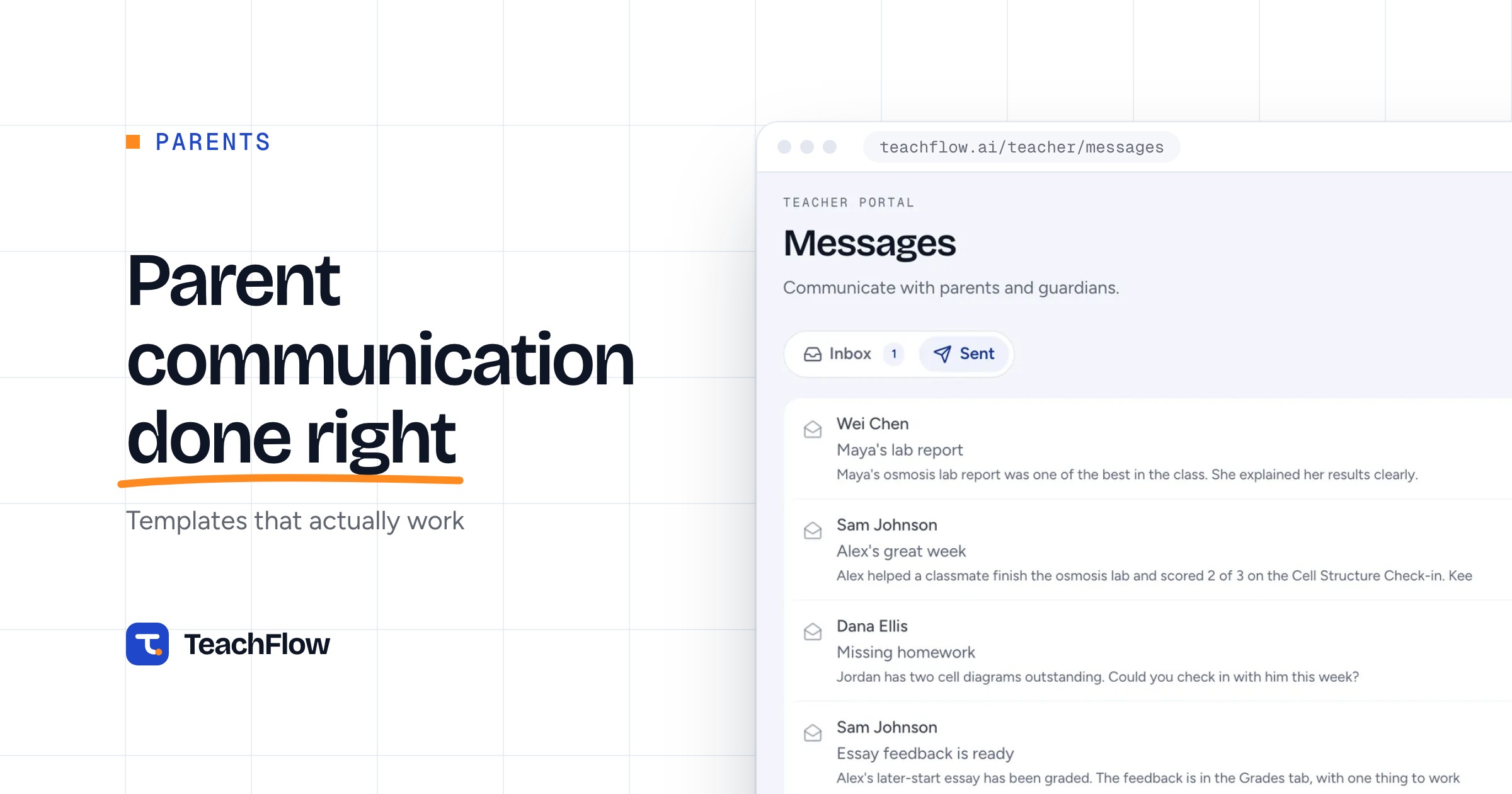
Parent communication is one of the most underestimated factors in student success. Research consistently shows that students perform better when their families are engaged with their education — but engagement does not happen automatically. It happens when teachers communicate proactively, clearly, and in ways that make parents feel like partners rather than recipients of bad news. Most parent communication problems are not about effort or intention; they are about systems. Teachers who communicate well usually have templates and workflows that make it easy to send the right message at the right time.
The most effective templates share a few characteristics. They lead with specificity — "Maya completed all five assignments this week and her quiz score improved by 12 points" lands differently than "Maya is doing well." They separate observation from judgment — describing what happened rather than labeling it. And they end with a clear, low-friction next step: a question to answer, a date to note, a short action to take. Templates for common situations — introductory notes at the start of the year, progress updates, concern notices, and celebration messages — can be drafted once and reused across your entire class with minimal customization.
The timing of communication matters as much as the content. A concern message sent early, before a small issue becomes a pattern, is far easier for everyone than a message that arrives when things have already gone sideways. Building a communication calendar at the start of each semester — even just noting when you will send progress updates and when you will do individual check-ins — creates the structure that makes consistent communication sustainable. When you are not scrambling to figure out what to say or when to say it, the actual writing takes minutes instead of the anxious half-hour it often consumes.